Why Do My Knees Hurt When I First Stand Up After Sitting?

Why Do My Knees Hurt When I First Stand Up After Sitting?

You’ve been sitting for an hour watching your granddaughter in her school play. The show finishes, everyone starts getting up and you stand — but your knee feels stiff and sore.

For the first few steps, you can't quite walk normally. You need a moment to straighten up and get your knee moving before you can follow everyone else out.

If this sounds familiar, you may be wondering: why does my knee hurt when I first stand up after sitting, but then feel better once I start walking?

Maybe you notice it after a long car journey too. You arrive to visit your family, get out of the car and those first few steps are stiff and uncomfortable. By the time you reach their front door, your knee is already beginning to loosen.

The Short Answer

When you've been sitting for a while, your knee and the muscles around your hip and leg have been relatively still and doing much less work.

When you stand, your hips and knees suddenly have to straighten, your muscles have to support your body weight and your whole leg has to prepare for walking.

If your knee is already stiff, sensitive or affected by osteoarthritis, going from sitting to standing and putting weight through your leg can feel uncomfortable.

Once you take a few steps, your knee starts bending and straightening, your muscles become more active and your hip, knee and ankle begin working together again.

That's one reason those first few steps can hurt, but then become easier as you start walking.

As a physiotherapist, I hear this regularly from people in their 50s, 60s and beyond.

And one of the first questions is often:

“Does this mean I have arthritis?”

Not necessarily.

Why Does My Knee Hurt When I First Stand Up?

Think about what your body has been doing while you were sitting.

• Your hips and knees have stayed bent: sometimes for 30 minutes, an hour or even longer.
• Your hip flexors have stayed in a shortened position: these are the muscles at the front of your hips.
• Your glutes have been relatively quiet: your buttock muscles haven't needed to do as much because the chair has been supporting you.
• Your thigh and calf muscles have been doing less work: they haven't had to support your body weight.
• Your knee has been relatively still: it hasn't been repeatedly bending, straightening and taking weight as it does when you walk.

After you've been in one position for a while, your knee and the tissues around it can temporarily feel stiff and less comfortable moving.

Some people describe it as if their knee has been wrapped or squeezed by a tight band.

Then you stand.

Within seconds you're asking your body to:

stand up → take your body weight → straighten your hips and knees → balance → start walking.

If your knee is already stiff, sensitive or affected by osteoarthritis, you may notice those first movements much more.

You may also come across the terms “theatre sign” or “movie sign” when searching online. These usually describe pain around or behind the kneecap after sitting with the knee bent for a long time, particularly with patellofemoral pain. They don't describe every type of knee pain after sitting.

Why Does Knee Pain After Sitting Get Better When I Walk?

Think about getting out of the car after that hour-long journey.

Your first three or four steps are uncomfortable, but by the time you reach the front door your knee is beginning to feel easier.

What's changed?

Your whole leg — not just your knee — has started moving and working again.

• Your thigh muscles start working: Your quadriceps — the large muscles at the front of your thighs — help straighten your knees and support you as you stand and start walking.
• Your glutes start working: Your buttock muscles help straighten your hips, bring you upright and control your pelvis as you walk.
• Your knee starts moving: Instead of staying bent in one position, your knee repeatedly bends and straightens. Movement also helps distribute the natural synovial fluid within the knee around the joint surfaces.
• Your ankles and feet join in: Your ankle starts moving and your calf and shin muscles begin working as your foot takes your weight and you move forwards.
• Your balance comes into play: Your lower back, pelvis, hips, knees, ankles and feet all work together as your weight moves from one leg to the other.

After several steps, your joints have moved repeatedly and your muscles are actively supporting you again.

That's why a knee that initially feels tight, heavy or like it needs a few moments to get going may start feeling more comfortable once you've walked for a little while.

And if movement helps once you're walking, it makes sense to try some gentle movement before you even stand up.

Is Knee Pain After Sitting a Sign of Osteoarthritis?

It can be, but not always.

Pain and stiffness after resting can occur with knee osteoarthritis. You may also notice:

• stiffness after sitting or resting
• pain when walking or standing for longer
• difficulty getting out of a chair
• stairs becoming more uncomfortable
• reduced knee movement
• occasional swelling
• your knee needing a little time to get going after rest

Some people also notice stiffness when they first get out of bed in the morning.

But one symptom on its own isn't enough to tell us whether you have osteoarthritis.

Previous injuries, irritation around the kneecap, changes involving the meniscus and other knee problems can cause similar symptoms.

As a physiotherapist, I would want to know more than simply whether your knee hurts when you stand.

I'd want to know how you're managing walking, stairs and getting out of a chair; whether your knee swells, gives way or locks; and whether you're starting to avoid things because you don't trust your knee anymore.

That tells us much more than one symptom alone.

Why Does Only One Knee Hurt After Sitting?

You may sit with both knees bent, but when you stand only one knee hurts.
That's not unusual.

Our two legs aren't identical.

You may have had an old injury on one side. One knee may be more affected by osteoarthritis than the other. Your strength or movement may differ from side to side, or you may naturally put more weight through one leg when you stand.

Meniscus problems, irritation around the kneecap and other knee conditions can also affect one side more than the other.

So whether your pain is in one knee or both knees is useful information, but it doesn't tell us the cause on its own.

Why Does My Knee Click or Crunch When I Stand Up?

You may sit with both knees bent, but when you stand only one knee hurts.
That's not unusual.

Our two legs aren't identical.

You may have had an old injury on one side. One knee may be more affected by osteoarthritis than the other. Your strength or movement may differ from side to side, or you may naturally put more weight through one leg when you stand.

Meniscus problems, irritation around the kneecap and other knee conditions can also affect one side more than the other.

So whether your pain is in one knee or both knees is useful information, but it doesn't tell us the cause on its own.

What Can I Do Before Standing Up to Reduce Knee Stiffness?

If those first few steps are difficult, don't wait until you're standing to start moving.

Try getting your knee, ankle and leg muscles moving while you're still sitting.
You don't need anything complicated.

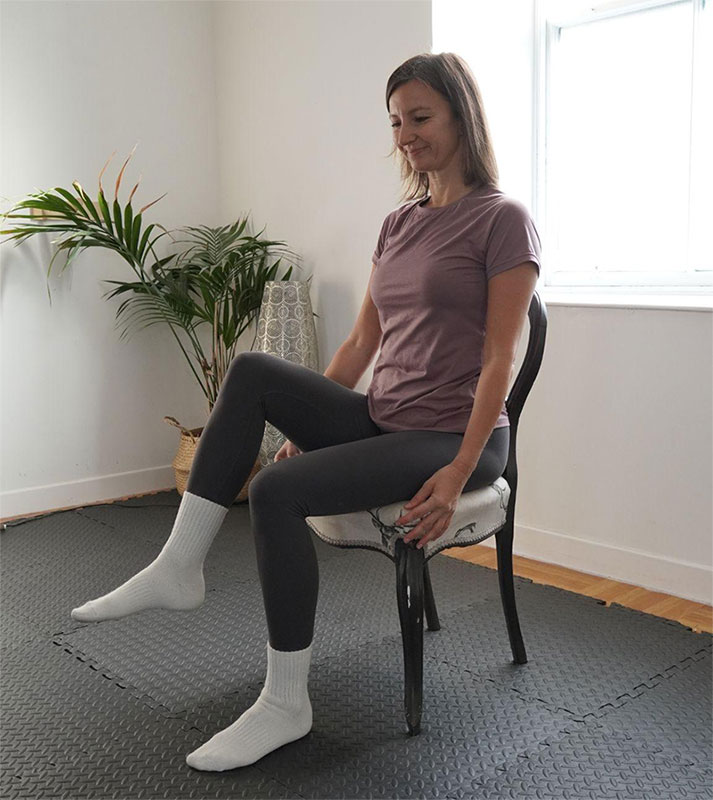
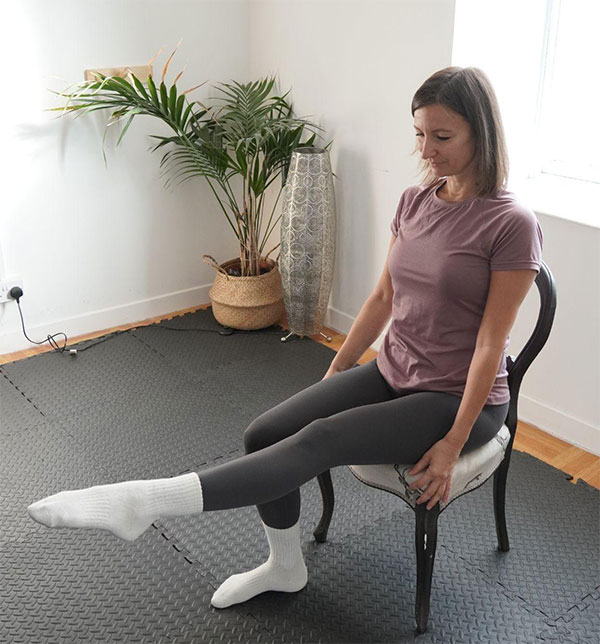
1. Straighten Your Knee

Get your knee moving: Slowly straighten one leg in front of you and lower it again.

Repeat several times, then change legs.

This moves your knee and starts getting your thigh muscles working before you stand.

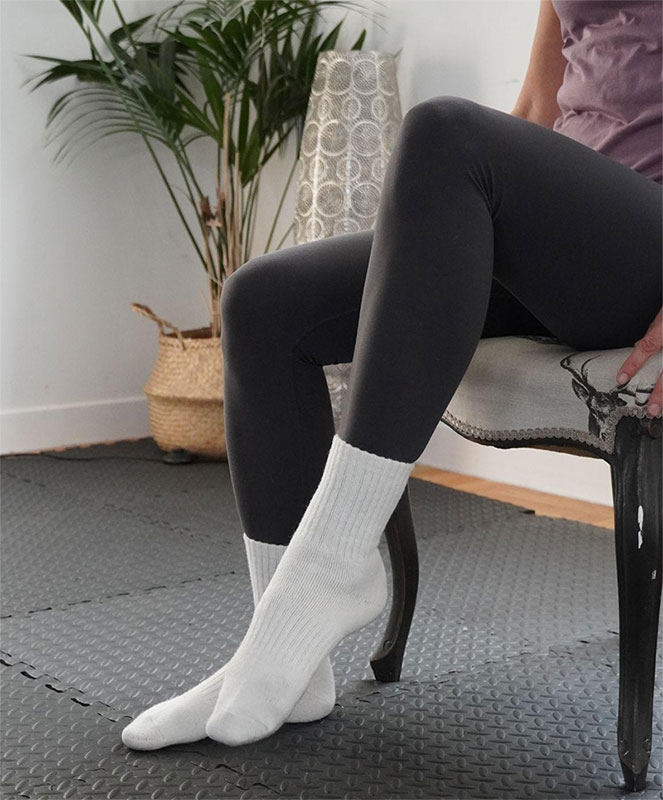
2. Move Your Ankles

Get your ankles moving: Bring your toes towards you and then point them away.

Repeat several times.

Your ankles are going to be working as soon as you start walking, so get them moving too.

3. Gently March Your Legs

Get your hips moving: Lift one foot slightly from the floor, lower it and change sides.
Repeat several times.

Then bring your feet underneath you and prepare to stand.

Keep the movements comfortable.

If a movement causes significant pain or your symptoms are getting worse rather than settling, don't keep forcing it.

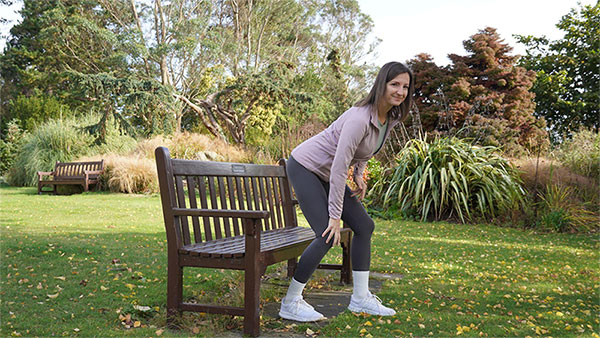
What's the Best Way to Stand Up From a Chair With Knee Pain?

The chair itself can make a big difference.

Getting out of a low, soft sofa is much harder than getting out of a firm, supportive chair.

Try this:

1. Move towards the front of the chair.
2. Bring your feet back slightly.
3. Lean your body forwards.
4. Push through your feet and stand.
5. Use the armrests if you need them.

Once you're standing, you don't have to rush straight into walking.

Give yourself a moment, find your balance and then take your first few steps.

A slightly higher, supportive chair can make things easier if you're currently struggling.

But I don't want you to spend the rest of your life avoiding lower chairs.

Getting up from a chair is an important everyday strength exercise.

Being able to do it helps maintain the leg strength you need for walking, stairs and staying independent.

Should I Move More Often If My Knees Get Stiff After Sitting?

Yes.

If you know your knees become uncomfortable after you've been sitting for a long time, try not to stay in exactly the same position for hours when you don't need to.

Change position. Move your knees and ankles. Get up and walk around when it's practical.
If you're traveling a long distance, take opportunities to stop and move when it's safe and practical.

If you're watching television or sitting at a desk, get up periodically rather than remaining in exactly the same position for hours.

There isn't one magic number of minutes that suits everybody.

Pay attention to how your own knees respond to prolonged sitting and introduce some movement before they become extremely stiff.

Should I Avoid Walking If My Knee Hurts for the First Few Steps?

Usually, no.

If you have mild stiffness or discomfort that settles once you start moving, completely avoiding walking is unlikely to be the answer.

One of the things I regularly explain to people with knee arthritis is that movement and strengthening are important.

That doesn't mean pushing through severe pain.

And it certainly doesn't mean suddenly walking five miles because somebody told you exercise is good for arthritis.

It means finding the amount of movement your knee can manage now and gradually building from there.

If you have knee osteoarthritis and carry extra body weight, weight loss can also improve pain and function for some people.

But knee pain is rarely as simple as:

“Your knees hurt because of your weight.”

Strength, activity levels, previous injuries, general health and what's happening within the knee can all play a part.

When Should I Have Knee Pain After Sitting Assessed?

If your knee feels mildly stiff when you first stand but loosens after several steps, it doesn't automatically mean you need urgent treatment.

But I would consider having it assessed if:

• the pain is becoming more frequent or severe
• swelling keeps returning
• your knee repeatedly gives way
• your knee genuinely locks
• you're losing movement
• walking or stairs are becoming increasingly difficult
• the pain doesn't settle once you start moving
• you're avoiding activities because you don't trust your knee
• your symptoms aren't improving

Seek medical advice promptly if your knee suddenly becomes very painful, significantly swollen, hot or red, you cannot put weight through it, or you feel unwell or feverish at the same time.

Don't Wait Until Your Knee Stops You Doing Things

A stiff knee isn't just about your knee.

It's about what that knee allows you to do.

It's being able to sit through your granddaughter's school play and walk out afterwards.

It's driving to see your family and getting out of the car without worrying about those first few steps.

It's walking to the shops, managing the stairs, meeting friends and continuing to do the ordinary things that make up your life.

So if you're already noticing knee stiffness after sitting or pain during those first few steps, this is a good time to start working on it.

You don't need to begin with difficult exercises.

Start with movement you can manage now and gradually build from there.

If you have knee osteoarthritis, have been told you have arthritis, or think arthritis may be contributing to your symptoms, I've created a free Knee Arthritis Confidence Plan to help you understand your knee, keep moving and start building confidence in what your knee can do.

Get your free Knee Arthritis Confidence Plan here.

Your knees don't have to be perfect for you to keep moving.

The goal is to help you feel stronger, more confident and able to keep doing the everyday things that matter to you.

Disclaimer: This article is for general information and education only and is not a substitute for individual medical advice, diagnosis or physiotherapy assessment. If you are concerned about your symptoms, or they are severe, worsening or persistent, speak to an appropriate healthcare professional.

About the Author

Agata Kolaczyk — Physiotherapist & Clinical Pilates Instructor

Agata is the founder of AK Evolve Physiotherapy & Pilates and has more than 20 years of experience as a physiotherapist. She works with adults who want to stay active, maintain their strength and confidence, and continue doing the things that matter to them as they get older.

More like this

No posts found...